Energy Gels vs Bars for Cycling: Which Is Better for Long Rides?
Not a competition with one winner. A decision framework: when gels make more sense than bars, when bars win, and how most riders should actually mix the two.
- energy gels vs bars cycling
- gels or bars for long rides
- cycling energy bar vs gel
- best fuel for long bike ride
- carbs per hour gels vs bars
- cycling nutrition long ride
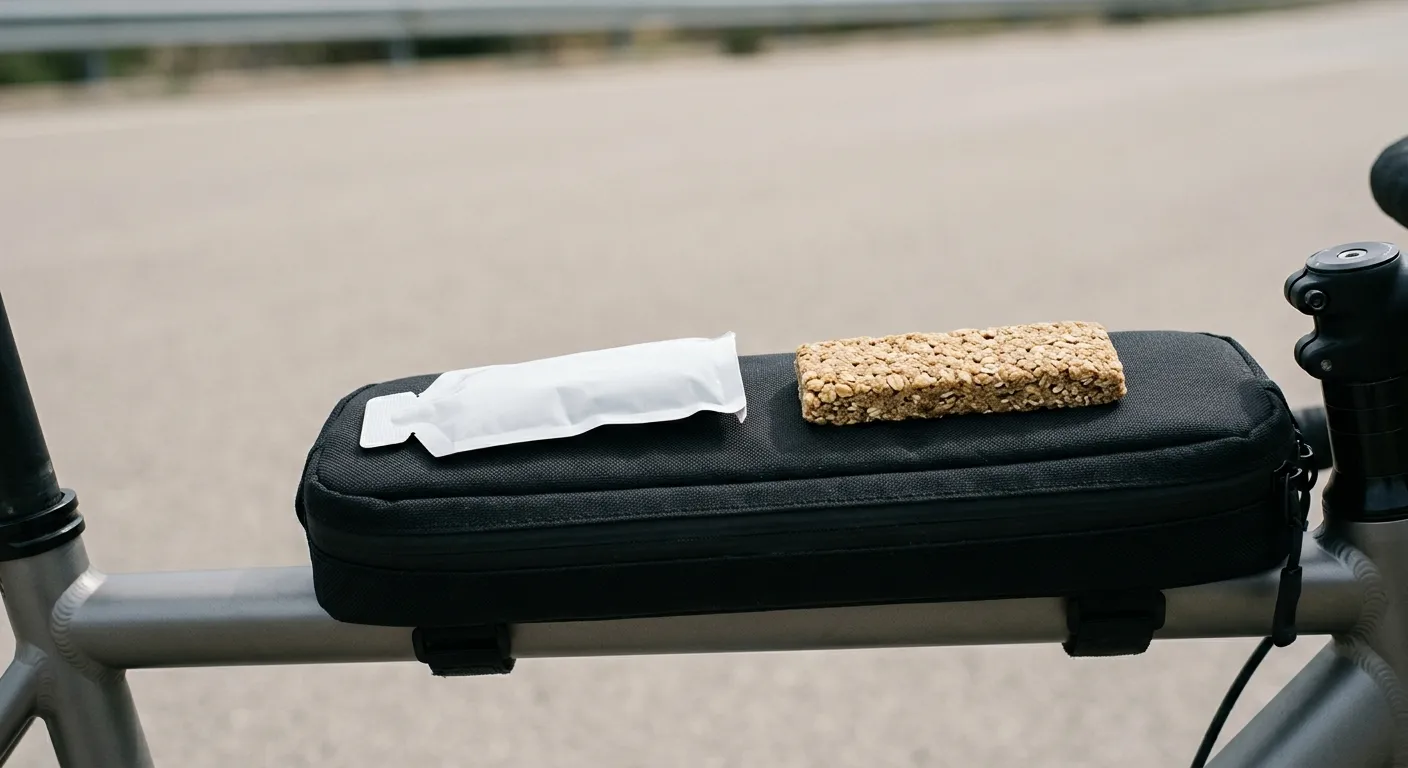
Wrong question: which is better. Right question: which does what job
Gels and bars are not competing for the same job, even though they often get compared as if they were. A gel is fast, dense carbohydrate designed to go down in seconds with minimal chewing. A bar is slower, bulkier, and closer to real food — more filling, generally cheaper per gram of carbohydrate, but harder to eat at high intensity or on rough roads.
Most experienced long-distance riders do not pick one. They use both, at different points of the same ride, for different reasons.
Head-to-head comparison
| Energy gel | Energy bar | |
|---|---|---|
| Typical carbs | 20-40g per sachet | 30-45g per bar |
| Digestion speed | Fast — simple sugars, minimal chewing | Slower — more fibre, fat or protein slows absorption |
| Easy to eat while climbing/racing hard | Yes | Harder — needs chewing, awkward at high heart rate |
| Fullness / satiety | Low — barely registers as food | Higher — feels like eating something |
| Typical cost per 30g carbs | Roughly £1.30-£2.20 (see best cheap energy gels) | Often cheaper, roughly £0.90-£1.60 per 30g |
| Gut comfort at high intensity | Generally better — simple carbs digest faster under stress | Can sit heavier — fat, fibre or protein slow gastric emptying |
| Best used | Hard efforts, climbs, final hour, races | Steady endurance pace, early-to-mid ride, when appetite is still normal |
Neither column is objectively better. They solve different problems at different points in a ride.
When gels win
- Effort is hard. Above threshold or during a race, blood flow is diverted away from the gut. Simple, fast-digesting carbohydrate is far easier to process than something with fat or fibre.
- You need to eat one-handed on rough terrain. A gel needs no chewing and can be taken in seconds on a technical descent or cobbled section.
- Late in a long ride, when appetite has dropped. Many riders lose interest in solid food after 3-4 hours; a gel is easier to force down than a bar even when nothing sounds appealing.
When bars win
- Steady, moderate-intensity riding. A social or endurance-pace ride is exactly where a bar's slower release and higher satiety work in your favour.
- Cost matters and pace allows chewing. Bars are frequently cheaper per gram of carbohydrate than gels, particularly own-brand and oat-based options.
- You want something that feels like actual food. On very long days, several hours of gels alone becomes unpleasant for most people. A bar breaks that up.
A sensible default mix for a long ride
For a 3-5 hour ride at 60-90g of carbohydrate an hour, a common and workable split is:
- Bars for the first half, while appetite and gut comfort are highest and pace is likely more moderate.
- Gels for the second half, especially the final 60-90 minutes, when intensity often rises and appetite for solid food usually drops.
- A carbohydrate drink mix throughout, to cover part of the hourly target without needing either.
This is a starting point, not a rule — test any combination in training well before relying on it for an event. See best energy gels for long bike rides for the carb-rate maths behind the split.
Gels vs bars questions
Are energy bars better than gels for cycling?
Neither is universally better. Bars suit steady, moderate-intensity riding and tend to be cheaper per gram of carbohydrate. Gels suit hard efforts, technical terrain and the later stages of a long ride when appetite drops.
Can I use only bars on a long ride instead of gels?
Yes, for moderate-intensity riding. It becomes harder at high intensity, since chewing and digesting a bar is more difficult when breathing hard, and many riders find bars less appealing after several hours.
What should I eat in the last hour of a hard ride?
Most riders do best with fast, simple carbohydrate in the final hour of a hard ride or race — gels or a carb drink mix rather than bars, since appetite and digestion both work against solid food at that point.
Is it cheaper to fuel with bars instead of gels?
Often, yes, per gram of carbohydrate. See best cheap energy gels for cycling for where gels close that gap, particularly at higher carbohydrate concentrations per sachet.
Related guides
Best energy gels for cycling
The full gel comparison — carbs, cost and gut comfort by brand.
Best energy gels for long bike rides
How gel-and-bar combinations change once a ride passes three hours.
Best cheap energy gels for cycling
Where bars usually beat gels on cost per gram of carbohydrate.
What to eat and drink on a 100-mile ride
See gels and bars combined into a full hour-by-hour plan.