Best Cheap Energy Gels for Cycling: Lowest Cost per 30g of Carbs
Most gel round-ups rank by taste or brand. This one ranks by the number that actually matters if you fuel every ride: cost per 30g of carbohydrate.
- best cheap energy gels for cycling
- cheapest cycling gels
- budget energy gels cycling
- energy gel cost per carb
- cheap alternative to Maurten
- cost per gram carbs gel
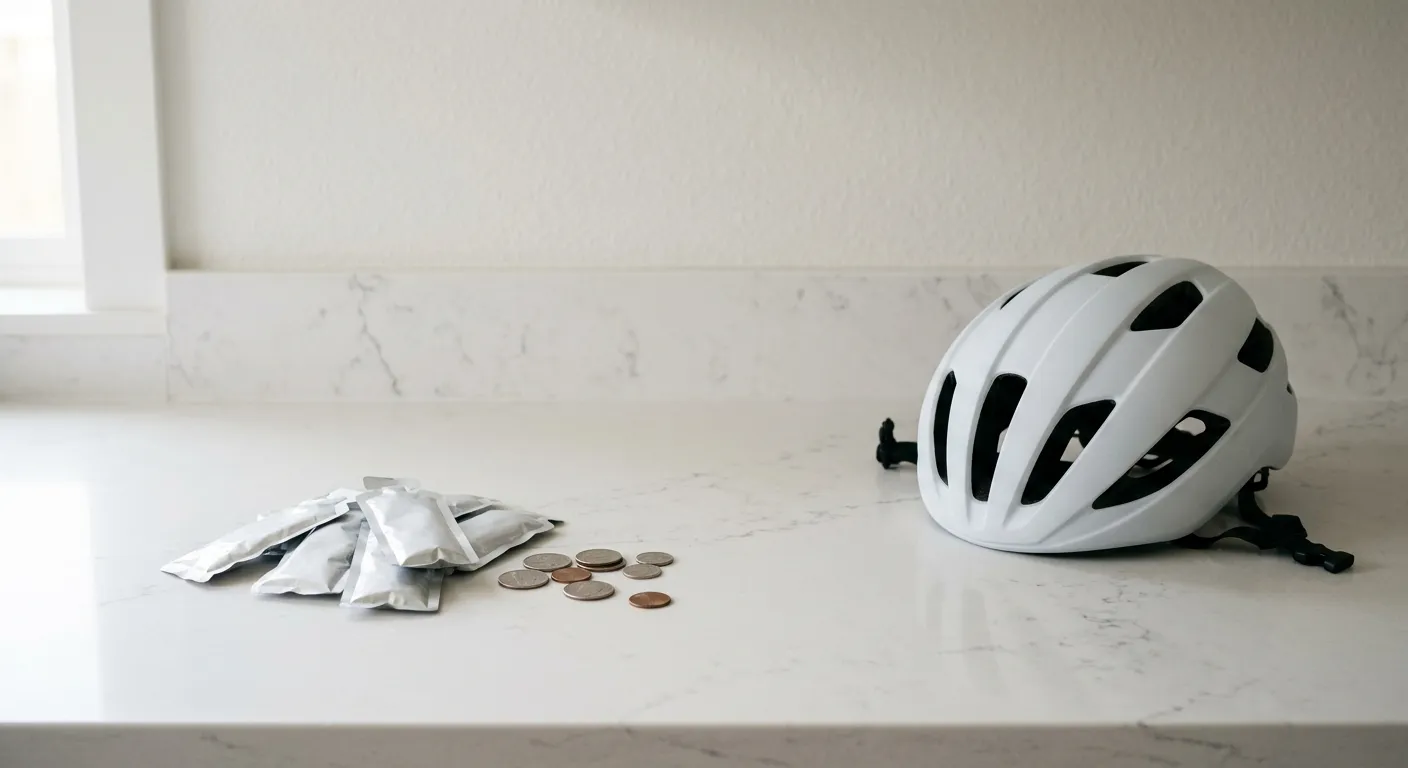
Fuelling every ride gets expensive if you buy on price-per-gel
A gel costing £1.00 sounds cheaper than one costing £2.20. It usually is not, once you account for how much carbohydrate is actually inside. A 20g gel at £1.00 costs roughly £1.50 per 30g of carbohydrate. A 40g gel at £2.20 costs roughly £1.65 per 30g. The gap is much smaller than the sticker price suggests, and sometimes reverses entirely.
If you fuel most rides over 90 minutes, this number compounds fast. Someone doing four 3-hour rides a week, at 60g of carbohydrate an hour, gets through well over 700g of gel carbohydrate a week. At that volume, cost per 30g is the only price comparison worth making.
Cheapest gels, ranked by cost per 30g of carbohydrate
Prices are typical UK retail and move with offers and multipacks, so treat the ranking as relative rather than fixed to the day you read this.
| Gel | Carbs per gel | Typical price | Approx. cost per 30g carbs |
|---|---|---|---|
| High5 Energy Gel | 23g | Roughly £1.00-£1.30 | Usually the cheapest on a standard shelf, especially in multipacks |
| Torq Gel | 20g | Roughly £1.40-£1.70 | Similar to SIS GO, slightly better in bulk boxes |
| SIS GO Isotonic Gel | 22g | Roughly £1.30-£1.60 | Competitive, and isotonic so no water needed |
| SIS Beta Fuel Gel | 40g | Roughly £2.20-£2.60 | Higher sticker price, but mid-table on cost per gram because of the bigger carb load |
| Precision Fuel PF 30 Gel | 30g | Roughly £2.00-£2.30 | Reasonable given the carb content |
| Own-brand supermarket/own-label gels | Varies, often 20-22g | Roughly £0.70-£1.10 where available | Can beat all of the above, but check the glucose:fructose blend before buying in bulk |
| Maurten Gel 100 | 25g | Roughly £2.80-£3.50 | Consistently the most expensive per gram on the market |
Multibuy boxes of 20-30 gels usually undercut single-gel pricing by 15-25%, which matters more than the brand once you are buying for a full season.
The genuinely cheapest option: homemade carb mix
Below any commercial gel on cost is mixing your own. A simple 2:1 maltodextrin-to-fructose (or dextrose) mix, made up in a soft flask, costs a small fraction of branded gels per gram of carbohydrate — often under £0.20 per 30g when bought in bulk powder form.
The trade-off is convenience and consistency: you need to weigh and mix it yourself, it is less portable than a sealed sachet, and you lose any added electrolytes or flavouring unless you add them. For long training rides where cost matters more than convenience, it is worth trying. For racing, most riders still prefer the tested reliability of a commercial gel.
Where paying more is actually worth it
Cheap gels are a genuinely sensible default for training. Two situations where the extra cost of a premium gel is easier to justify:
- Your stomach struggles with cheaper formulas. If a budget gel causes discomfort at race-day intensity, the cost of switching brands is smaller than the cost of a ruined event.
- You need very high carb rates in few sachets. At 90-120g/hour, a 40g high-carb gel means fewer wrappers and less fumbling than stacking multiple 20g gels — worth something on technical or hard efforts.
Outside those two cases, the cheapest gel that your gut tolerates is usually the right choice, and the saved money is better spent elsewhere in your training or kit budget.
Cheap energy gel questions
What is the cheapest energy gel for cycling?
Own-label supermarket or bulk-box gels are typically cheapest per gram of carbohydrate, followed closely by High5 and Torq. Homemade maltodextrin-fructose mix is cheaper again, but takes more effort and is less proven for race day.
Are cheap energy gels as effective as expensive ones?
For most riders, yes. Carbohydrate is carbohydrate — the body does not know or care what the sachet cost. The differences between brands are mainly gut tolerance, texture and convenience, not effectiveness at delivering carbs.
Is it cheaper to make my own energy gels?
Usually, yes, often by a large margin per gram of carbohydrate. The trade-offs are convenience, shelf life and consistency, which is why many riders use homemade mix for training and a trusted commercial gel for racing.
How much should I expect to spend fuelling a long ride?
At 60-90g of carbohydrate an hour using mid-range gels, expect roughly £3-£6 an hour in gels alone, less if you mix in drink powder or real food, and less again with budget or homemade options.
Related guides
Best energy gels for cycling
The full comparison table cost-per-30g figures here are pulled from.
Maurten vs SIS Beta Fuel
What the premium end of the market actually costs, compared to the budget options here.
Energy gels vs bars for cycling
Bars are often cheaper again per gram of carbohydrate — here's when that trade-off makes sense.
Best energy gels for long bike rides
Cost adds up fastest on long rides. Here's how to budget a full day's fuelling.