Maurten vs SIS Beta Fuel: Which Cycling Fuel Makes More Sense?
Two premium gels, both aimed at high carbohydrate rates. Compared on cost per 100g of carbohydrate, packets needed for 90g/hour, and what a four-hour ride actually costs on each.
- Maurten vs SIS Beta Fuel
- Maurten vs Beta Fuel cycling
- SIS Beta Fuel review
- Maurten gel review
- high carb gel comparison cycling
- best gel for 90g carbs per hour
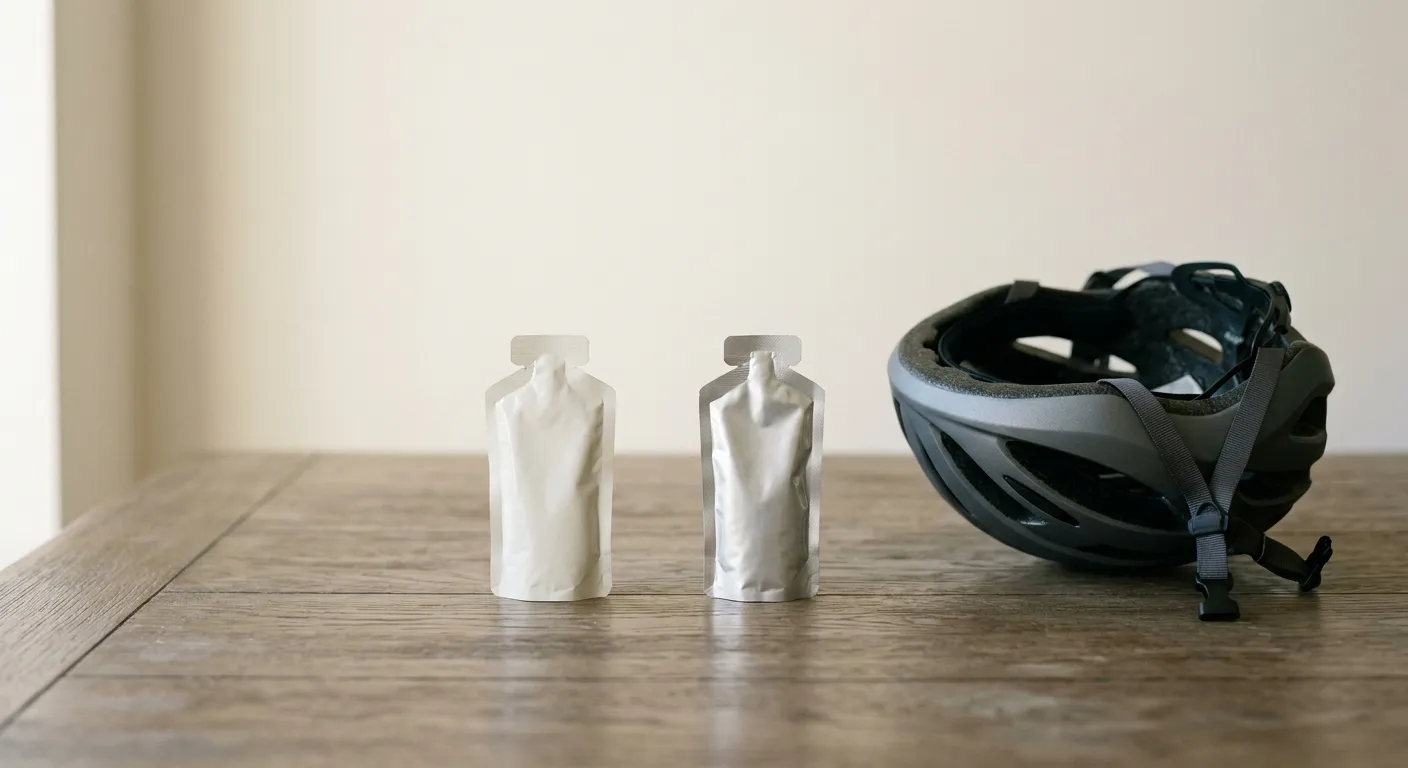
Two gels people are already comparing before they buy
Maurten and SIS Beta Fuel sit at the front of most conversations about serious carbohydrate loading on the bike. Both exist to let riders hit higher carb rates — 80-120g/hour — without the gut distress that pure glucose gels can cause at that intensity. Both are genuinely different products, not just different branding on the same formula, so a real comparison is more useful than either brand's own marketing.
This is a numbers comparison, not a taste test. Formulations and pricing change, so use this as a framework and check current labels before buying in bulk.
Head-to-head
| Maurten Gel 100 | SIS Beta Fuel Gel | |
|---|---|---|
| Carbs per gel | 25g | 40g |
| Carb approach | Hydrogel-encapsulated carbohydrate, designed to pass through the stomach as a gel rather than a liquid | Roughly 1:0.8 glucose:fructose ratio, a dual carb-transport blend |
| Caffeine option | Yes, Gel 100 CAF (100mg) | Yes, Beta Fuel CAF (varies by flavour) |
| Texture | Thick, gel-like, minimal flavour | Thinner, more liquid, more strongly flavoured |
| Water needed | No, but many riders find it easier with a sip of water | No |
| Typical price per gel | Roughly £2.80-£3.50 | Roughly £2.20-£2.60 |
| Cost per 100g of carbohydrate | Roughly £11.20-£14.00 | Roughly £5.50-£6.50 |
| Gels for 90g/hour | 3.6 gels — in practice, 4 | 2.25 gels — in practice, 2-3 |
| Sachets for a 4-hour ride at 90g/hour | ~15 gels (≈360g carbs) | ~9 gels (≈360g carbs) |
| Approx. cost, 4-hour ride at 90g/hour, gels only | Roughly £42-£53 | Roughly £20-£23 |
On cost per gram of carbohydrate and cost per long ride, SIS Beta Fuel is clearly the cheaper way to hit a high carb rate. Maurten's case rests almost entirely on the hydrogel texture suiting stomachs that struggle with more traditional gel formulas — for riders who tolerate Beta Fuel fine, that price gap is difficult to justify on nutrition grounds alone.
What actually decides it: your stomach, not the spec sheet
Both gels deliver genuinely high carbohydrate rates that a simple glucose gel cannot match without causing distress for most riders. The practical difference is texture and how each one sits during hard efforts:
- Maurten's hydrogel is reported by many riders as easier to tolerate at very high intensity, because it is designed to behave more like a semi-solid than a sugary liquid in the stomach.
- SIS Beta Fuel's more liquid, strongly flavoured format is easier for some riders to get down quickly, but a small number find it too sweet in large quantities over many hours.
Neither of these is universal. The only way to know which one your stomach prefers is to test both in training, at the intensity and duration you actually plan to race or ride, well before it matters.
If cost is the deciding factor
For most riders training and racing across a season, the cost difference between these two gels over a year of long rides is not trivial — the comparison above shows roughly double the cost per gram of carbohydrate for Maurten versus Beta Fuel. A sensible approach for many riders is to use the cheaper option (Beta Fuel, or a similarly priced high-carb alternative) for training and lower-stakes long rides, and reserve the pricier option for the events where gut comfort matters most and the extra cost is easiest to justify.
See SIS Beta Fuel alternatives and best cheap energy gels for cycling for other ways to hit a high carb rate without paying Maurten's premium.
Maurten vs SIS Beta Fuel questions
Is Maurten actually better than SIS Beta Fuel?
Not straightforwardly. Beta Fuel delivers more carbohydrate per gel at roughly half the cost per gram. Maurten's advantage, where it exists, is texture and gut comfort for riders who specifically struggle with more traditional gel formulas. If your stomach handles Beta Fuel fine, Maurten is unlikely to be worth the extra cost.
How many SIS Beta Fuel gels do I need for a 4-hour ride?
At a 90g/hour target, roughly 9 gels (40g carbs each) covers a 4-hour ride from gels alone, though most riders split this between gels and a carb drink mix rather than relying on gels exclusively.
Can I mix Maurten and SIS Beta Fuel on the same ride?
Yes — many riders alternate brands to vary flavour and texture across a long ride. There is no nutritional reason they cannot be combined, provided the total carbohydrate stays within your target and tolerance.
Which is cheaper, Maurten or Beta Fuel?
SIS Beta Fuel is meaningfully cheaper per gram of carbohydrate — roughly half the cost of Maurten Gel 100 per 100g of carbs, based on typical UK retail pricing.
Related guides
Best energy gels for cycling
The full comparison table these two gels are pulled from.
Best energy gels for long bike rides
How to build a full fuelling plan around a high-carb gel like either of these.
What to eat and drink on a 100-mile ride
See where a high-carb gel choice fits into a full ride nutrition plan.
Best electrolytes for heavy sweaters
Carbohydrate is one half of long-ride fuelling. Sodium is the other.